A safer faceless video automation workflow
Automation should reduce repetitive handoffs. It should not make facts, rights, or publishing decisions invisible.
Define the series contract
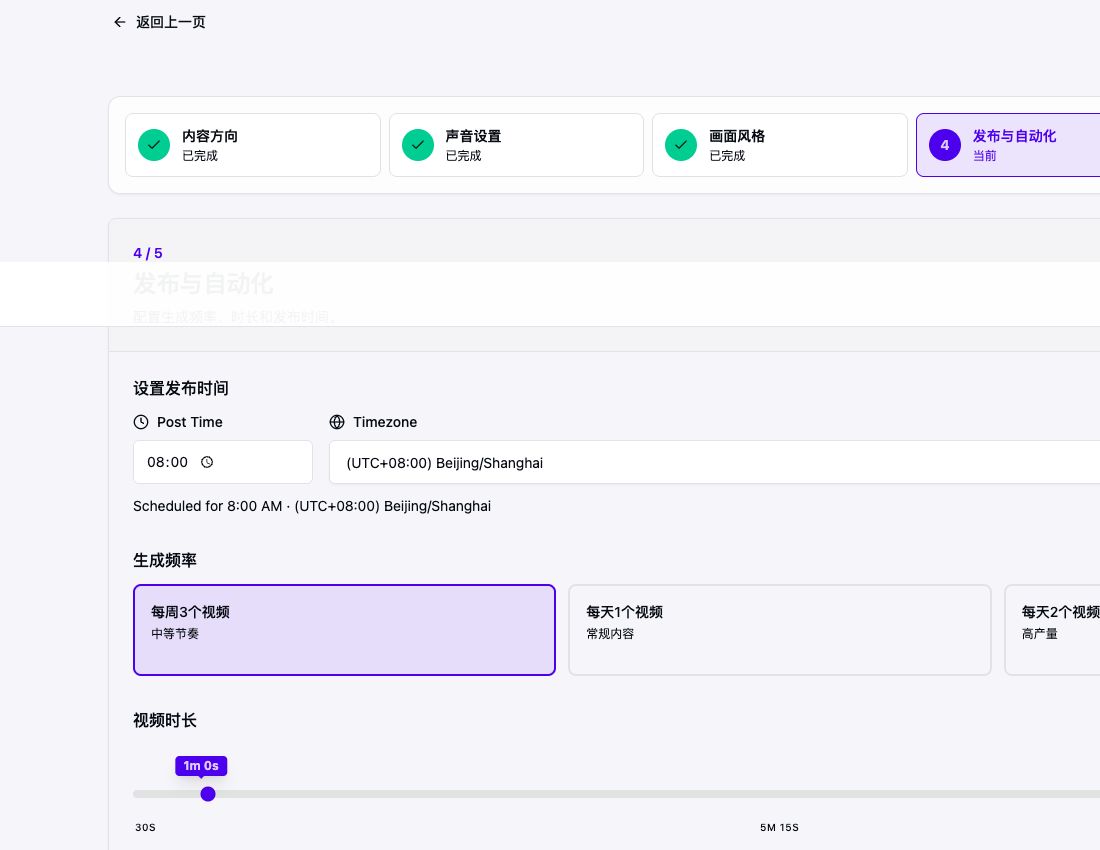
Record the audience, subjects, exclusions, source policy, voice, visual direction, length, cadence, and publishing destinations.
Create explicit review gates
Require script approval before expensive generation and final approval before publishing. Assign responsibility for factual review, rights, and channel metadata.
Monitor exceptions
Track failed sources, unusual credit use, missing visuals, pronunciation problems, publishing errors, and account authorization changes.
Measure completed videos, not generated drafts
The useful funnel is workflow started, draft reviewed, first video generated, video approved, and video published. A large queue of unused drafts is not success.
Verified product evidence
Long-form podcast workflow with explicit controls
The public nine-minute English-learning podcast used a long-form brief, two voices, a consistent studio visual, subtitles, and a complete reviewed transcript. It shows how a repeatable system can preserve format without hiding the episode-level review.
Last verified
Before
Opaque automation: generate frequently and send every successful render straight to every channel.
After review
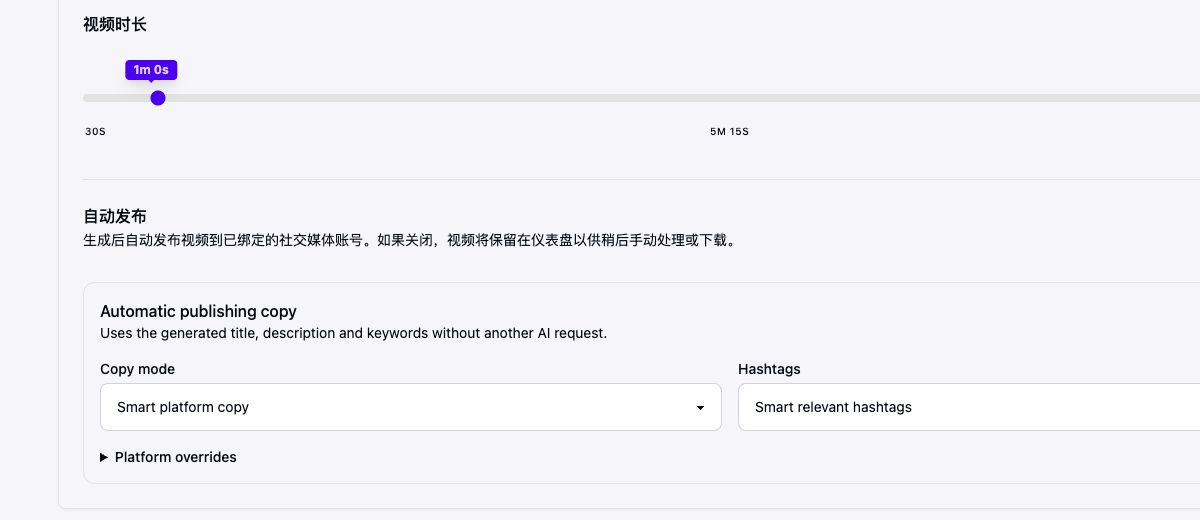
Controlled automation: define a series contract, approve scripts before generation, configure schedule and metadata, review the export, and monitor publishing exceptions.
Account and platform requirements
- Each platform connection needs the channel owner's authorization.
- Publishing permissions and account eligibility vary by platform.
- A responsible reviewer should own factual, rights, and final publishing checks.
Frequently asked questions
Should automation publish without review?
For most teams, no. Keep a final approval step until the format, source quality, rights process, and exception handling are proven.
What should I automate first?
Start with repeatable planning, scene preparation, duration estimates, and scheduling. Preserve human decisions around claims, rights, and final publishing.